Friday, 28 May 2010

Final image no.2 + production process

I discovered this image of a great - great uncle of mine, a portrait of a young 'angelic' child.
Instantly i thought of:
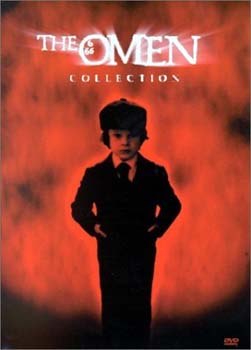
The Omen, the story of a devil possessed child, a boy named Damien.
The story consists of this small unsuspecting boy, unravelling to reveal this boy is the spawn of satan and in-fact is the anti-christ, sent to wreak havoc and destruction. 
Naturally as i was reminded of this, the image of the boy had to incorporate demon and satanic principles  and symbolisms:
First of all i thought, every demon has his demons, his minions, i wanted them to 'follow' him to be there with him, tailing him, bursting around him. I took a portrait of myself first of all, then drasically increased the contrasts and removed excess features, keeping only the humanly identifiable traits, like eyes, a nose and a mouth, i then adjusted the colours in order to incorporate and merge them into the background seamlessly in order to give the effect of them 'bursting/bulging' out of the walls. Following this, i then placed the faces over various positions around the image, twisting, tilting, rotating and resizing them in order to create the feel theres almost an army of them in all their deformed shapes and sizes, in completing this i then realised this was not the look that i was intending for this image, i then took the image back to the drawing board.
I sourced this image of a cyclops at the science museum in London, i chose to over exaggerate the idea of the devil child Damien and thought to incorporate horns and a barbaric weapon to create an almost 'cliche' of symbols and meanings. First of all i cut out the out the arms and weapon of the cyclops with the lasso tool and merged them into the image, resizing and modifying them in order to fit in with my image seamlessly, in order to completely create the look of the arms of the cyclops actually being the arms of the child, i used the clone tool and healing brush tool, i removed the child's current arms and replaced them with that of the cyclops along with the weapon.
I then repeated the same style method in order to give the child horns, i took an image of a horned animals skull in the natural history museum, i then used the lasso tool to cut out, merged the horns with the child, adjusted tones, colours and contrasted, tilted and rotated the horns to fit with the perspectives of the child. 
My Final Image
Upon completion of the is image, i still felt there was something missing and so i set about framing the image. I wanted to portray the image in the best possible light, to completely uphold the effect iv'e already achieved by not simply putting picture in frame but by going all the way in doing so.
I firstly, found a small, ornate frame from a 2nd hand store, a gothic style, deep red and gold, oval frame. I then removed the back fixings of the frame and discarded them and stuck the photograph in the rear of the frame. I then went to Homebase DIY store and collected various wallpaper samples, in which i filtered through and deciphered the most suitable for my idea, i then splattered the wallpaper with a blood effect liquid which i made with honey, soy sauce and red food colouring and allowed to dry, staining the wallpaper harshly, giving the effect of vicious blood splatter. Once this was dry i wrapped a 1 & 1/2 foot square cutting of plyboard with the stained wallpaper glued and stapled to attach it and then fixed the frame and image in the middle. The effect i was going for was that of a sampling of a wall in a grotesque, 'haunted' style house of horror, where this innocently, satanic child is depicted upon the wall as if like any other portrait would be.


The Final Piece
(Taken with a camera phone due to my camera currently being out of action)

Labels:

Digital Practitioners

In the photography industry, it has become extremely common practice that photoshop is used in order to create and to manipulate images, scenes and subjects to the whims and desires of the practitioner doing so.
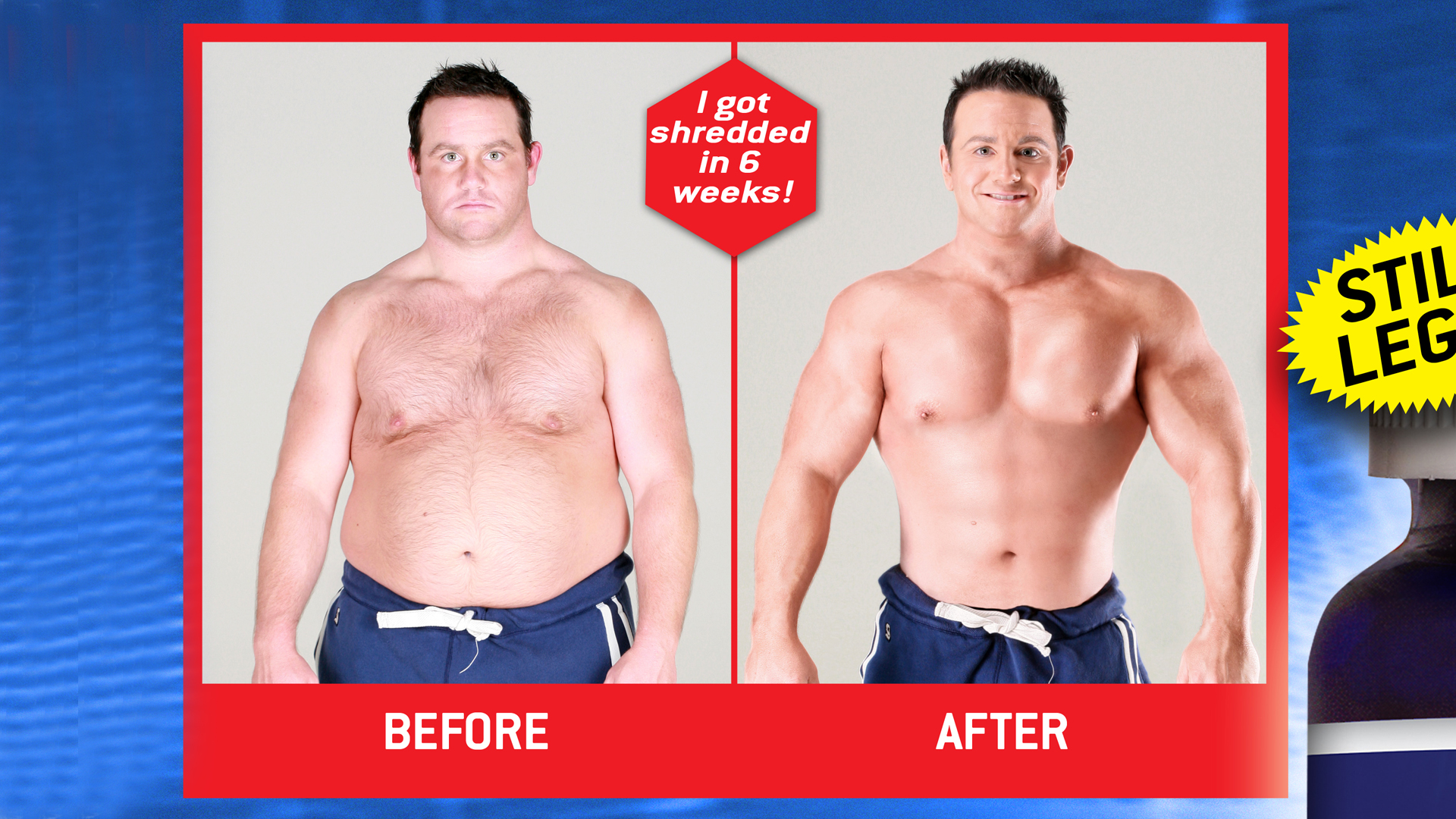
By using photoshopping techniques the photographer/image constructor (dependant on the amount of the image actually made by the photographer and their input in the image production) can obtain the exact desired look and effect even if made of imagination and dreams. With the ability of being able to conjure extravagant non-existent scenes, the photographer and/or image editor has the ability to modify and remake beauty, which has the ability to put doubt and self belief in that of the viewer, with the possibility of the viewer leading into self disbelief and image issues. As the ability is available to us, to create and modify beauty, this means that these techniques can not only be use in the fashion industry but also in the marketing and fitness industry in order to sell supplements making false 'magical' claims.
Photoshop can also be used in a more positive and faithfully artistic style aswell, there are many photographers that use obvious photoshopping techniques in order to compile amazing and intriqate imagery, some examples of these are:


Anthony Crossfield


A photography 'freak of nature' Crossfield's eccentric ideas and techniques are beyond compare, using multiple exposures of a scene, Crossfields changes his subjects and slightly alters their positioning in comparison to the previous subject. With this technique, Crossfield then merges the 2 images, the background seamlessly fits in on both as they are the same, while combining the 2 subjects, creating a deformed, disfigured, 'freak', really adding a strong confusing and intriguing image.
Crossfield also works with various other styles, all of which following the common trend of the disfiguring of the human form.


Crossfield also created various portraits in which he takes various shots of the subject, connecting all of which and creating the effect of 'unravelling' the subject, laying out the skin and features up a flat surface. Crossfields work would in no shape or form be possible, with such a powerful effect it it wasn't for the sake of photoshop and the digital age, none of Crossfields work would be possible or even the idea would be unimaginable and impossible. 


August Bradley
Like Dave Hill's work, August uses the same principles, transforming an interesting scene, with powerful expertise and post production techniques August turns everyone of her images into a masterpiece beyond compare. August portrays almost fashion photography style images, but rather more than that, adding a conceptual art twist upon every image.
August's work that is for the desired niche of fashion photography, even still incorporates a strong feel of conceptual art, making the image not just revolve around the purpose of the image being for commercial use but also as a work of art, giving the image 2 outlets allowing for the appreciation and respect of such a wide audience. 

In this image by August, a 16th Century styled Gentleman sits in contemplation, knife in hand, above a rat. This image leads to great confusion as to its purpose, the man and the attire he is 'styling' could lead to the belief of the images use being for fashion or commercial purposes, but then the artistry behind the image, the shadowy, contrasting, dark and dank scene in which could be the cell holding this noble prisoner, contemplating his life while contemplating the life of the rat. August's images all hold similar trends, that in being, contrasting, strong colours, harsh scenes but smooth, sleek appearances upheld by all of the subjects she uses.


Saturday, 15 May 2010

Digital Scanners

Digital scanning equipment.
A flatbed scanner (above image) works by the user placing desired piece to be scanned, face down, closing lid of scanner (creating a white opaque background) and beginning scanning, the process of recording the image is created by a bar of light which runs along the length of the image recording all thats in its path, the purpose of the lid is make the image completely opaque so that full quality is achieved without light loss or leakage. Variabilities of filetypes and DPI (dots((pixels))per inch) can be made from the computer.
In order to digitise or reproduce analogue prints, forms and negatives the most apt piece of equipment for accuracy, clarity and convenience would be a computer scanner.
Scanners can be used for many different purposes not only for the use of digitising analogue prints and written forms. 
With any image, originally taken with film, that is digitally manipulated, in order to begin this process, the image has to first be scanned, before scanners, whenever print based images were needed to be replicated, this would be achieved by re-photographing the image. The problem with re photographing an image, was the fact that lighting had to be very carefully calibrated to avoid glare and to maintain as much of the image in its eaxact form, without colour distortion. Another issue would be that the camera would have to be aligned perfectly, so that the image appeared to be in perfect proportion, allowing for no mi-shapes or disfigurements.
Below are 2 images, copies of the same initial images, which is an analogue print.
Image 1 is a rephotograph and image 2 was produced on a scanner. As you can see clarity, vibrance and sharpness are far superior to in the 2nd image rather than to the first.


It is obvious that whenever digitisation or reproduction is needed for an image, the only optimal way to accomplish this is to scan the image, via a scanner.
It is also possible to create images and take photographs with a scanner, although with an incredibly small depth of field, it is completely possible to make astounding images using a scanner as a camera:
 
Above is an image that is part of a series i created using only a scanner, the main benefit of using a scanner for this type of artwork goes much further than the creation of conceptual art, but also giving the ability of such beautiful clarity, colour and exquisite close up detail.

The scanner that i use for my works (including the above image is:

Canon CanoScan LiDE 20
Flatbed Scanner

Archived Product
CanoScan LiDE 20
The CanoScan LiDE 20 is the ideal scanner for beginners. Slimline, stylish and easy to install and use, the LiDE 20 incorporates Canon’s LED indirect exposure technology, and offers high resolution scans with consistent results.

Features

  • Stylish design
  • 600 x 1200 dpi, 48-bit internal colour
  • Three EZ buttons
  • Single cable plug ‘n’ play connection via USB
  • Advanced Z-lid to allow easy scanning from large sources
  • Includes Arcsoft PhotoStudio, PhotoBase, Omni-page SE OCR software
  • Stand allows vertical scanning

Canon's unique LiDE Technology achieves power and space-efficiency without compromising functionality or imaging quality


Compact performance
The CanoScan LiDE 20 measures just 256 x 383 x 34 mm and is finished with an attractive ocean blue coloured lid. It includes a scanner stand as standard, enabling you to store and scan with the scanner on its side—it’s the world’s smallest installation footprint.

One-touch scanning
The CanoScan LiDE 20 includes three EZ scan buttons that give you access to features you use most. The ‘scan’ button saves the scanned image to file, ‘copy’ sends your image to a printer for automatic output, and ‘email’ saves the scanned files as a specified file size for attachment.

Multi-Photo mode
The one-pass multi-scan feature allows multiple images to be scanned, making the process faster than before.

Connectivity
The CanoScan LiDE 20 gets its power from the USB connection, and is compatible with PC and Macintosh. It also offers Fast Multi-Photo mode, and comes with Arcsoft PhotoStudio, PhotoBase and Omni-page SE OCR software.


Labels:

Final Image no.1 + production process

 
The primary image, i discovered this image amongst a collection of old photographs of my granddad and realized its potential. I first started by manipulating the image, adjusting the contrast, brightness and tones of the image, to achieve the highest possible level of sharpness and clarity that i could while still maintaining the aged feel of the image. 
Following this, i went to london in which i toured many galleries, museums and exhibitions in order to obtain  various images that i could use to incorporate into my image.
 
Medusa - Statue at the science museum in London
As my chosen theme for my image was based around mythology and fantasy, i focused on locations in  which i could find an abundance of statues, paintings, figures and drawings portraying mythical and fantasy beings. After selecting my chosen image (the above of Medusa the Greek image of evil, if gazed upon would turn the gazer into stone) it was then time to manipulate and incorporate her into my image.
This meant numerous adjustments to both images, firstly, i had to incorporate the image of Medusa seamlessly into the image, to achieve this, i had to cut carefully around the figure of medusa, i then transferred her into the image. Then i had to blend the contrasts and colours of medusa to match that of the contrasts and colours of the original image. I also extended the image on the right hand, i achieved this by using the clone tool and the healing brush tool, in order to make a seamless edit that was unnoticeable this was in order to make provisions of the inclusion of my second incorporated image:
My second incorporated image was to be Poseidon, Greek 'God Of The Seas':
I chose Poseidon as the theme of my image was related to the sea's, Poseidon was the god of the seas and would destroy anyone who displeased him, mainly being ships, relating to my image with the battle ship in the background and the small boat my granddad is standing on in the foreground.
Poseidon - A statue located at the V&A (Victoria and Albert) in London
I had to first locate a suitable statue/image of Poseidon that was well positioned to be incorporated into my image seamlessly and effectively. Like Medusa i had to cut out the image of Poseidon using the lasso tool, i then transferred it into my image, adjusted contrasts, brightness and colours to fit my image and then mirrored the image vertically to be able to fit it correspondingly into my image.
The Final Image
After i incorporated these subjects, it was then time for the overal post production finishing touches to take place on the images, i used a green colour cast, replacing most of the whites and lighter colour while deepening the blacks and increasing massively the overall contrasts of the 3 images combined. Lastly i added in a map gradient style finish, that appears to emnate from around the subjects, creating a magical, powerful field pulsing from these powerful beings, creating a true;
CLASH OF THE TITANS

Labels:

Friday, 14 May 2010

http://www.astropix.com/HTML/J_DIGIT/ETHICS.HTM

                                The Ethics of Digital Manipulation
Is it real, or is it Photoshop?

M8 "True" Color
M8 "False" Color

How can we believe anything we see anymore? With today's technology, we can literally do anything we want with images.
In the example see above, we have changed the red color of M8, the Lagoon Nebula, whose main spectral emission lies in the red portion of the spectrum, to blue with a simple adjustment in Photoshop.
When photography was first invented, its overwhelming power came from the fact that it recorded nature more realistically than any other art form had ever done before. Because of this, people trusted it and believed it portrayed "reality" and "truth".
But, just as story telling could portray the "truth" with an accurate accounting of the facts, it could just as easily become fiction. Fake and manipulated photographs - visual fiction - began circulating not long after the invention of photography.
With the invention of motion pictures, and certainly television, the public came to know that not every picture they saw was necessarily factual in its depiction of reality.


Historical Image Manipulation
Many people think that the manipulation of images started with the invention of Photoshop, but there have been fake photographs since the invention of photography.

A "Fairy" photograph from 1917 from Cottingley, England by Elise Wright and Frances Griffiths.

Daquilla Family Photograph by A. Werner and Sons.
In 1917, Elise Wright, age 16, and her cousin Frances Griffiths, age 10, used a simple camera to produce what they claimed were photographs of fairies in their garden in Cottingley, England (above).

Arthur Conon Doyle, creator of Sherlock Holmes, believed these photos to be real, and wrote pamphlets attesting to their truthfulness. Even today some people believe these photographs are real.
At about the same time, photographic composites of different images were created by commercial photographic studios to bring family members together into one picture when they were not together in reality for the portrait session (right).
Notice that the three people on the left in the image appear to be floating in mid air in this photographic portrait of the Daquilla family from the early 20th century by A. Werner and Sons in New York.
They were apparently cut out of other photos and pasted on top of a photo of the woman at right and re-photographed in a composite image.


Ethics and Aesthetics
When we correct, manipulate and enhance images in Photoshop, we must deal with questions of both ethics and aesthetics. This discussion is not only limited to digital manipulation, but also includes conventional darkroom methods.
Ethics are a set of rules that we invent that define what we think is good and bad. The dictionary says ethics are "a set of moral principles or values" and that ethical means "conforming to accepted professional standards of conduct".
Aesthetics, on the other hand, deal with the nature of beauty, art and taste, and things that are pleasing in appearance.
With digital processing, there is almost no limit to what can be done to an image, and many things are done to images with the best intentions. The question is, when does the pursuit of aesthetics violate our ethics?
Changes can be made to images that are undetectable, so much so that there is now discussion that photographs will no longer be allowed as evidence in courts of law.
Today's viewers however, are very sophisticated visually. They know full well that anything, literally, can be done to an image. They have seen dinosaurs and aliens portrayed with lifelike realism in the movies. Problems arise though because viewers expect to be fooled in the movies, and tend to get upset and feel betrayed when they are fooled in an allegedly factual medium such as the news business.
In this discussion, there will be no simple black and white answers, everything will fall along a continuum and it is humans who decide the rules for what is considered ethical behavior and these rules can and do change over time.


The Myths of Objective Reality and Absolute Truth
The fundamental fact that we usually forget is that when we take a picture we do not make a perfectly objective recording of reality. What we make is an interpretation of reality.
Another problem in the "accurate" recording of nature is inherent in the choice of technology used by a photographer. Do you prefer Kodachrome of Velvia color film? Take your pick. Which particular Canon digital picture style do you like: Standard, Portrait, Landscape, Neutral, Faithful, or Monochrome? Which is a "true" recording of nature? None of these are. Each is an interpretation of nature. There is no film or digital camera that perfectly and accurately records nature even on this simple level.
It is also a fact that color is created in the mind of the observer. It is not a physical property of objects in the world, just as pain is not a physical property of the baseball that hits you in the eye.
Another way that still photography departs from reality is that it "freezes" time. We experience reality as a continuous stream while we are conscious. Motion video mimics this, but traditional still photography does not.


Interpretations
Photographers interpret what they see in a myriad of ways. The choice of lens by focal length and working f/stop alter spatial relationships between objects in the frame. The choice of location and focal length changes the very content of the picture. The choice of when to trip the shutter freezes a particular moment in a fluid and continuously changing time stream.
The real world is not recorded with strict objectivity in photographs because they are taken by human photographers who exercise editorial judgments in the taking of the photo, which includes the personal preferences, aesthetics, prejudices, intentions and philosophies of the photographer who takes the image.


Ethical Limits
How much is too much, how far is too far?
It depends on what you are trying to do. I am trying to share the beauty and wonder of the universe with others through my astrophotography. The question is more one of aesthetics than ethics for me because I am not formally trying to produce science with my images. My images do have documentary aspects however, so ethical considerations do come into play.
It's simple to me. The special qualities of long-exposure astrophotography allow the recording of objects and details that are mostly invisible to normal human vision. It is really out there in nature, we just can't see it. Some of this detail is incredibly faint and low contrast. If I enhance this faint detail in the original image to make it more visible, or more aesthetically appealing, that is ethically acceptable to me.
If you add something that wasn't there in the original scene, you've crossed the line from a documentary art form into a fictional one. This may or may not be OK, depending on what your purpose is. If your purpose is to portray a scene as truthful, then it's not OK. If your purpose was to create fiction, or "art", then it is OK. You just have to be up front and tell the viewer what you are doing in either case.
This position is, however, an opinion, and a completely subjective value judgment on my part. Like all ethical judgments, it can be unique and different for each individual.

Moon Composite
As for changing the contents of an image, personally I don't think much of the practice. For example, consider an image that shows a double exposure of a gigantic moon or an eclipse shot with a telephoto lens and a foreground scene that was shot with a wide angle. It's fake. I know it immediately when I look at it. A scene like that can't exist in nature. It doesn't do anything for me. I also know how difficult it is to take a photo of the real thing, and personally I place a tremendous amount of value on knowing an image is an attempt at being accurate. However, other people might find a big moon in a wide-angle scene interesting and really enjoy it. On several occasions I have seen both photographically knowledgeable people, as well as the general public, get really excited over such an image. In my opinion, as long as the artist does not try to misrepresent what they are doing and methods are completely explained in the caption, it is an aesthetic judgment as to their success or failure.
I think the acceptance and popularity of images like this are mostly due to the proclivities of the viewer - they would rather be entertained and don't care that much that they were fooled. In fact, many people take great delight in being fooled, for example, at magic shows.
Most people who willingly suspend disbelief do so only in the context of entertainment and fiction. Although you could argue that others, such as those who really believe in things such as ghosts and fairies, have different, lower, standards of credulity than most rational, scientifically inclined people.
What most people get justifiably upset at is when someone intentionally lies and presents something as truthful when it is not.


Exceptions
In some situations it would be unethical not to digitally alter the content of a photograph, such as when a photo definitely records something incorrectly, such as red eye. The red eye would never have been there if we didn't change the original scene by adding the flash.
Another example would be correcting the green cast of an image shot under fluorescent lights on daylight film. Our eyes adapt to the green color of the light and we see it as normal in the scene, but the daylight film actually records it accurately as green. You would have a hard time getting most people to accept that the green is more "truthful".

Blue Moon Composite
In other cases, the only way to present a truer representation of reality is through a composite rather than with a single exposure. For instance this photograph of the moon over the Philadelphia skyline is a fairly accurate representation of the scene as it really appeared to the eye.
However, there was no way to take this image in a single exposure because of the difference in brightness between the full moon and the foreground - some 14 stops difference.
Two exposures were made, one correct for the moon, and one correct for the foreground. They were then composited together in Photoshop. The moon is in the exact location it was when the photo was taken, and both photos were made with the same focal length lens.
The result was more true to the reality of the scene and the way it really looked than a single exposure could have captured. In this case the only way to faithfully represent the original scene was through some Photoshop "trickery". Was this truthful and ethical? I believe so and the procedure was fully explained in the caption.
Now, if I had moved the moon to make it better in composition, would I have crossed the ethical line if I presented this as a documentary photo? Yes, I think so.


Purposes and intentions
The important questions when we manipulate an image are, why are we doing this, and what are our purposes and intentions? Where do we draw the line? What is ethical in the digital manipulation and enhancement of a photo?
To answer these questions we must consider why we took the picture and what we are going to do with it. If the picture is taken for artistic purposes only, then pretty much anything goes because only aesthetic considerations come into play. If the photo was taken for documentary or journalistic reasons, then another set of ethical considerations come into play that have been developed by the photographer and the viewers of the image.
My personal opinion is that the answer hovers somewhere around the line that gets crossed when the manipulation is done with the intent to deceive the viewer, such as when two separate photos of John Kerry and Jane Fonda were put together for political purposes in a presidential election campaign to make it look like they appeared together at an anti-war rally.
Some people say that I go too far in the digital enhancement of my astrophotos, and that the colors in some of my images are over-exaggerated and garish. And that opinion is OK with me. However, it is my job as an artist to present my interpretation of reality, and it is their job as viewers to accept it and get something out of it, or not, and reject it.
As a journalist in my sports photography, my job and responsibility are to faithfully and truthfully interpret and represent reality in an image as well as I can understand it.


Do The Tools Make A Difference?
We start out with nature. We can only observe it intimately with our own senses. Some might argue that a perfect experience can only be a first person experience. But if we find something interesting or beautiful, we may want to share something of that experience with others.
If others are not there with us to view the original scene personally, we can only share our own interpretation of the original experience. And we can only share this experience through some other media than reality. It may be verbal, through an oral story that tells of what we experienced, or it may be written down in words. It may be through some technology such as a simple drawing with pencil and paper, or a more complex technology such as film, CCD imaging or video.
The tool or technology does not really matter. Do you really care whether Hemingway wrote with a pen and paper or a typewriter? What matters is what the artist does with the tool or technology. Is he true to the subject and reality as he sees it?
Is it the tool, or the user of the tool, that the viewer trusts? The viewer must trust the creator of the work. The artist's credibility is the only commodity of value that he has to exchange with the viewer for their trust.


The Bottom Line
If an artist painted an entire picture from a photograph, would this be unethical? Only if he tried to misrepresent what it was and how he did it. If the creator was honest about exactly what was done, then the viewer could make his own judgment.
Personally I would not place as much value on a painting of a photographic scene, because you had to have the photo first, and getting the photo was the hard part. I would also not put much value on an photo where details were added that were not in the original image.
Of course, you could argue, completely legitimately, that the real beauty is out there in nature, in reality, and that any recording, or representation of that beauty in a photograph or painting is only a pale imitation of the real thing. This is undoubtedly true, to a very large degree. It is also true that a photograph or painting by a skilled artist can capture some of the spirit of beauty of the scene, and that artifact can transmit some of that nature to others.


Final Thoughts
Because of the ease in manipulating digital images with Photoshop, some people are questioning whether images are "real" or "art", and wondering if they can believe anything they see anymore. But people have been faking photos since the invention of photography - this is nothing new.
People have also been making things up since the invention of language. It's called fiction! And lots of people get a lot of enjoyment out of it. As long as the purpose of the "art" is not to intentionally mislead or misrepresent, and the artist is clear about his methods and intentions, no one gets fooled. Of course, there are some art forms, such as magic, where the intention is specifically to deceive, and the viewer willingly goes along with it.
It only becomes a problem, and a question of ethics, when the artist or photographer lies about his motivations, methods, and conclusions, and presents images with the purpose to intentionally deceive.
Through my astrophotograhy I can share with others the wonders and beauty of the universe that are sometimes invisible to the human eye. Digital enhancement can add to these aesthetic experiences.
What is important is our motivation. Why are we doing these things? Are we doing them to deceive people? No, most of us are not. We are doing it to make the subject more visually interesting. We are simply trying to make it a better picture. Just as a writer enhances his factual stories with metaphor and adjectives, photographers can enhance their images with digital techniques such as contrast and color enhancement.
Writers massage the language of words; photographers massage the language of light.